
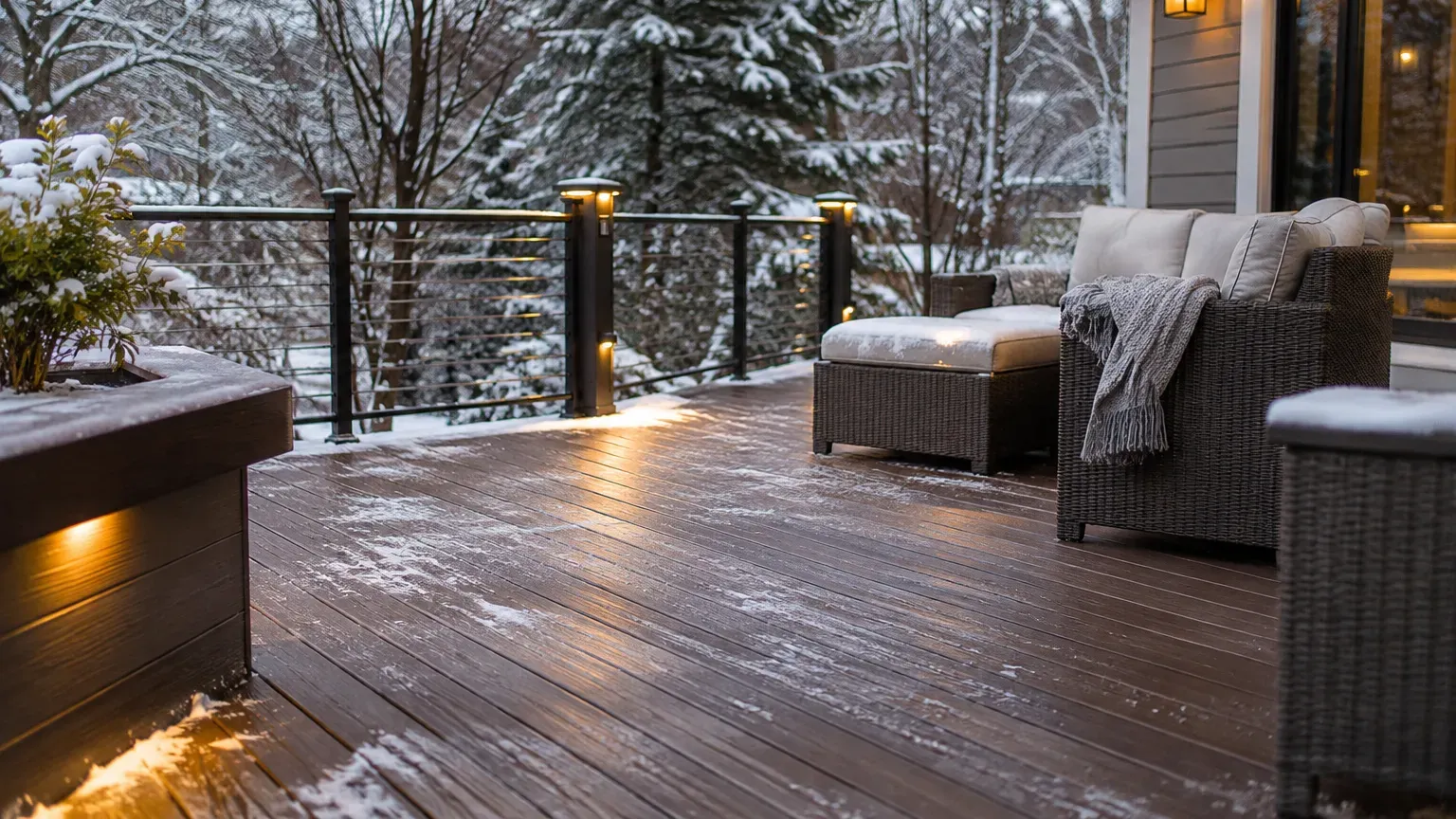
Trex composite decking endures Indiana’s freeze-thaw cycles without splitting, rotting, or warping, unlike wood, answering the question how does Trex composite decking hold up in freezing weather. Engineered to resist fading, staining, and moisture damage, Trex requires no sanding, painting, or staining. Homestead Outdoor Living installs this Performance-Engineered™ decking for Indiana homeowners, eliminating winter upkeep and delivering lasting durability through harsh Hoosier winters.
The Brutal Midwest Winter: What Freezing Temps Really Do to Traditional Patios
Indiana winters subject outdoor structures to relentless freeze-thaw cycles. Traditional wood decking absorbs moisture, which expands as temperatures drop and causes splitting, rotting, and warping. The damage compounds with every thaw and refreeze across a single Central Indiana season.
Wood’s vulnerability stems from its porous nature. Moisture settles into the grain, freezes, and exerts pressure that fractures the material from within. Composite decking resists moisture absorption, making it highly durable against the damaging freeze-thaw cycle. This engineered resistance prevents the structural degradation that plagues conventional lumber.
Why Does Wood Decking Fail Faster in Indiana Winters?
Wood decking absorbs moisture, which expands during freeze-thaw cycles and causes splitting, rotting, and warping. The repeated expansion and contraction weakens boards over time. Homeowners in Carmel, Fishers, and Zionsville observe this deterioration within a few harsh seasons.
Traditional wood decking requires ongoing maintenance and remains vulnerable to moisture damage in cold climates. Sealing and staining offer temporary protection, yet no surface treatment fully prevents water intrusion. The cycle of maintenance becomes an annual burden for discerning homeowners.
What Makes Composite Decking a Superior Winter Choice?
Composite decking winter care Indiana demands far less effort than wood alternatives. The engineered material resists moisture absorption, preventing the freeze-thaw damage that plagues wood. This inherent resilience translates to a low-maintenance winter deck that retains its structural integrity through repeated temperature swings.
For homeowners evaluating freeze-thaw deck performance, the distinction is clear. Composite boards do not split, rot, or warp under the same conditions that destroy traditional lumber. Those seeking a pergola and deck builder in Carmel understand that material selection determines long-term winter durability.
The Freeze-Thaw Advantage: Why Trex Composite Never Warps, Rots, or Splinters
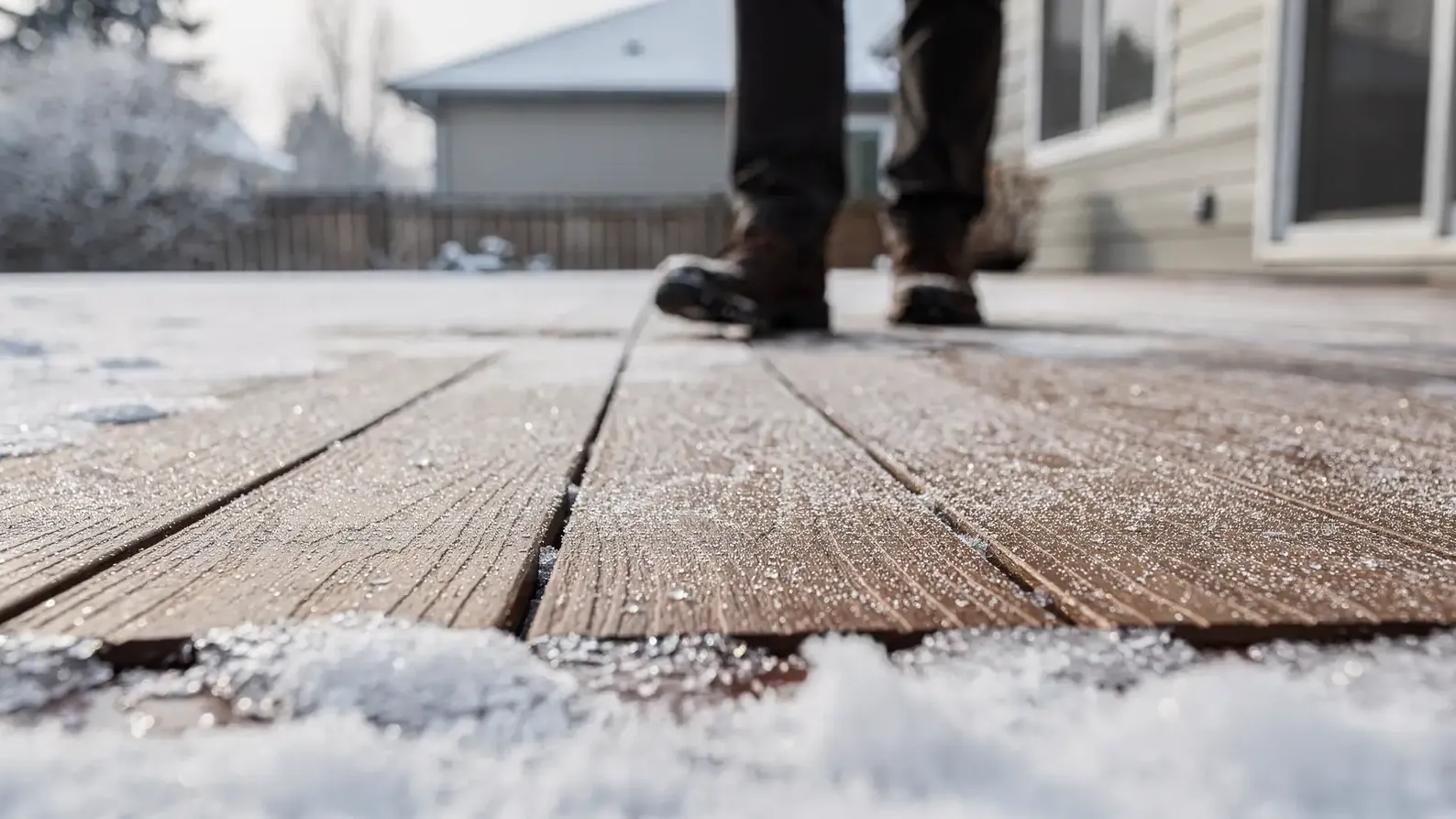
Trex composite decking withstands Indiana’s punishing freeze-thaw cycles without the structural failures that plague traditional wood. The engineered material resists moisture absorption at a fundamental level. This single property eliminates the mechanism that destroys conventional decks across Indiana each winter.
Wood decking absorbs water during snowmelt and rainfall. When temperatures plummet, that trapped moisture freezes and expands. The cycle repeats dozens of times in a typical Indiana winter. Boards split. Fasteners loosen. Grain patterns crack open. Freeze-thaw deck performance in composite materials follows an entirely different trajectory because water never penetrates the surface in the first place.
Precision Decks & Patios confirms that composite decking’s composition prevents splitting and cracking under heavy snow loads. The material’s density and engineered core distribute weight evenly across the substructure. Homeowners avoid the spring ritual of replacing splintered boards and hammering down popped nails.
How does composite decking resist moisture damage during winter?
The protective shell technology seals the board’s core completely. Unlike wood’s porous grain structure, the capped polymer surface sheds water on contact. Snow melts and drains away without saturating the material beneath. This engineered barrier also resists fading, staining, and mold growth, preserving the deck’s appearance through years of seasonal extremes.
Does Trex composite decking require winter sealing or treatment?
No seasonal treatment is necessary. The factory-applied protection never wears off, never requires reapplication, and never leaves homeowners scrambling to seal boards before the first hard freeze. A low-maintenance winter deck demands only occasional clearing of debris and snow. The material’s inherent durability handles the rest, season after season, without warping, rotting, or splintering.
Safe Winter Care: Snow Shovels, De-icers, and Zero-Hassle Upkeep
Safe winter care preserves a deck’s architectural finish and structural integrity. Composite decking requires minimal maintenance even during harsh Indiana winters, yet a few deliberate habits prevent unnecessary surface wear. Homeowners who neglect proper snow and ice removal risk micro-abrasions that dull the board’s refined appearance over successive seasons.
Composite decking winter care Indiana demands attention to tool selection before the first snowfall arrives. A plastic shovel with a non-metallic edge protects the deck’s surface from scratches and gouges. Metal blades introduce fine scratches that accumulate with each pass, gradually compromising the material’s engineered finish. The same principle applies to ice management: calcium chloride-based melts offer effective de-icing without the corrosive aggression of rock salt. Harsh rock salt attacks the deck’s surface polymers and leaves behind a chalky residue that diminishes visual appeal.
What is the safest way to remove snow from a composite deck?
A plastic shovel with a rounded edge clears snow without scarring the deck boards. Pushing snow along the board’s grain direction rather than across it further reduces friction marks. Lifting rather than dragging the shovel prevents the blade from catching on board edges.
Which ice melt products work best on composite decking?
Calcium chloride pellets dissolve ice efficiently at lower temperatures while remaining gentler on composite surfaces than sodium chloride. Applying the melt sparingly and sweeping away residual granules after thawing keeps the deck clean. Avoid sand or kitty litter, as gritty particles grind into the surface underfoot.
Trex decking snow removal follows these same principles. Composite decking handles freeze-thaw cycles better than wood, with less risk of splitting, rotting, or warping, according to Keystone Custom Decks. This inherent resilience means winter upkeep stays refreshingly simple. A few simple winter habits help keep a composite deck safe, beautiful, and ready for spring. Sweeping away standing water after a thaw prevents re-freezing into slick patches. Clearing snow before it compacts under repeated foot traffic eliminates the need for aggressive chipping later.
Low-maintenance winter deck ownership in Central Indiana translates to minutes of attention, not hours of labor. The material’s resistance to moisture absorption means freeze-thaw deck performance remains stable without sealing or staining rituals. Homeowners simply clear snow, apply calcium chloride when ice forms, and allow the deck to shed moisture naturally. This effortless rhythm protects the investment while preserving the outdoor space for spontaneous winter gatherings.
Beyond the Deck: Pairing Trex with Motorized Shade and Weather Screens
A resilient trex composite decking surface deserves an equally refined overhead system. Homestead Outdoor Living pairs premium decking with custom-engineered motorized louvered pergolas that respond to Indiana’s shifting skies through automation and app control. The result is a cohesive outdoor room rather than a collection of disconnected elements.
Indiana winters punish exposed structures. Snow accumulates, ice forms, and freeze-thaw cycles stress every joint. A motorized pergola with integrated gutter systems channels moisture away before it reaches the deck surface below. Weather sensors trigger automatic adjustments when conditions deteriorate, protecting both the overhead structure and the deck beneath it.
What shade options complement a Trex deck in Indiana?
Homeowners may select from a range of configurations suited to their property’s architecture. The motorized louvered pergola offers precise control over sunlight and ventilation. Porch enclosure systems extend usable square footage through colder months. Progressive MagnaTrack exterior motorized screens descend at the touch of a button, blocking wind and drifting snow while preserving sightlines.
How do weather screens protect a deck during winter?
Exterior motorized screens create a barrier against blowing precipitation. Integrated lighting extends evening use through Indiana’s shortened winter days. Privacy walls and accessory beams add architectural definition while reinforcing structural integrity. Built-in gutter systems prevent water from pooling on deck boards, reducing slip hazards during freeze-thaw cycles.
For homeowners exploring the full range of outdoor living options, pairing a low-maintenance winter deck with automated shade transforms seasonal limitations into year-round comfort. The combination elevates both function and aesthetic coherence.
Plan Your Complete Outdoor Oasis with Homestead Outdoor Living
A refined outdoor living space begins with a seamless design and installation process. Homestead Outdoor Living delivers custom-engineered pergolas and decks through a comprehensive, end-to-end approach that eliminates the fragmentation common in outdoor construction projects.
The company’s methodology transforms backyards across Indiana into sophisticated extensions of the home. Each project follows a structured path: design consultations, on-site estimates, custom engineering, and professional installation. This integrated sequence ensures every detail aligns with the property’s architecture and the client’s vision.
How does financing work for a custom outdoor project?
Budget alignment remains a priority throughout the planning phase. Homestead Outdoor Living provides financing support through HFS Financial, allowing clients to structure payments around their timeline. This option removes the barrier between conceptual design and completed installation.
The company serves both residential and commercial clients. Homeowners in Carmel, Zionsville, and Fishers receive the same meticulous attention as hospitality venues requiring durable, low-maintenance outdoor dining areas. Each installation reflects a commitment to craftsmanship that endures for decades.
Schedule Your Free Design Consultation
Homestead Outdoor Living begins every project with a straightforward consultation. Prospective customers can book a call, request a quote, or send a message to begin the process. The company serves homeowners and commercial clients seeking functional shade, protection, and refined aesthetics across Indiana.
A consultation establishes the foundation for a resilient outdoor living space. Clients in Carmel, Fishers, and Zionsville receive guidance tailored to their property’s exposure and intended use. The conversation covers design preferences, structural requirements, and material performance expectations.
What happens during the initial consultation?
The consultation process evaluates the site and the client’s vision. Homestead Outdoor Living reviews the property’s layout, existing structures, and desired functionality. This assessment informs recommendations for decking, pergolas, and enclosure systems suited to Indiana’s climate.
Frequently Asked Questions
Why does wood decking fail faster in Indiana winters?
The repeated expansion and contraction weakens boards over time, with deterioration visible within a few harsh seasons.
What makes Trex composite decking resistant to freezing weather?
Trex composite decking resists moisture absorption, preventing the freeze-thaw splitting, rotting, and warping that destroys wood. Its capped polymer surface sheds water on contact, eliminating the need for seasonal sealing or staining.
How should homeowners care for Trex decking during winter?
Safe winter care uses plastic shovels and calcium chloride melts to avoid surface scratches and chalky residue. This low-maintenance approach requires no sanding, painting, or staining through Indiana winters.
Conclusion
For Indiana homeowners, the choice between wood and Trex composite decking resolves into a question of enduring value versus perpetual maintenance. The freeze-thaw cycles that splinter and rot traditional lumber hold no sway over composite’s moisture-resistant composition, which demands only a plastic shovel and calcium chloride through the harshest months. Pairing that resilience with automated shade structures transforms a winter-weary backyard into a refined, year-round retreat, an investment in comfort that outlasts every season.