
Key Takeaways
Hidden deck fasteners are clip-based systems that secure composite boards from below, eliminating visible screw heads for a screw free composite deck finish.
The Trex Hideaway system works with grooved-edge boards, concealing clips between planks, while square-edge boards may require composite screws or plugs instead.
Consistent fastener spacing supports proper drainage, ventilation, and seasonal board movement across Indianapolis's shifting temperatures.
Composite decking reduces the recurring maintenance of traditional wood, while offering a broader range of colors, textures, and finishes.
Homestead Outdoor Living pairs hidden fastening systems with Trex decking, backed by a limited lifetime warranty, across Carmel, Zionsville, Fishers, Westfield, and Meridian Hills.
Why Do Hidden Deck Fasteners Create a Better Finish?
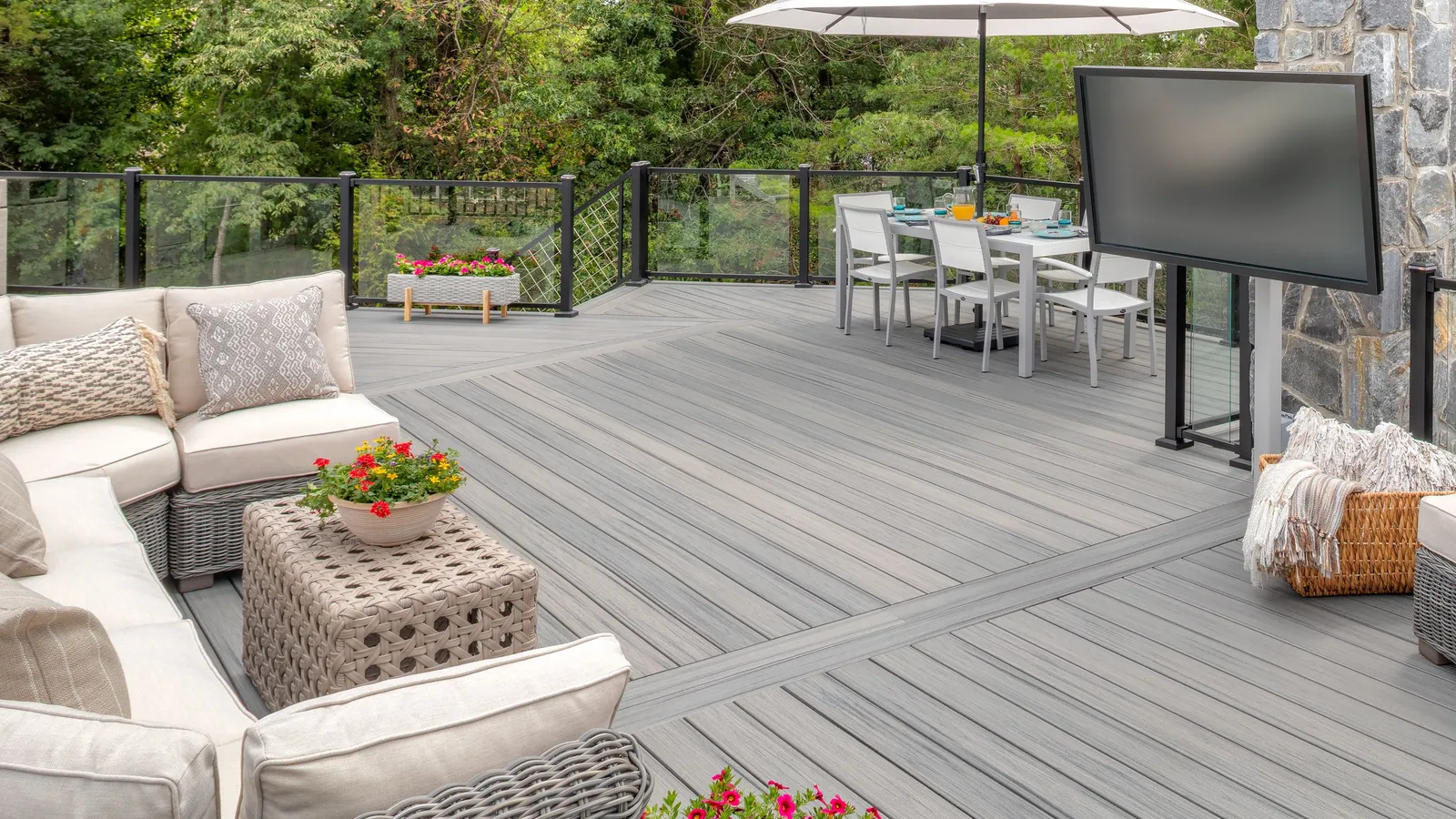
Clean, Uninterrupted Board Lines
Consistent Spacing Between Boards
A Smoother Walking Surface
A Finish That Complements Your Home's Architecture
Which Hidden Deck Fasteners Work With Trex Decking?
Fastening Method | How It Works |
|---|---|
Trex Hideaway hidden fasteners | Compatible clips fit into grooved board edges, concealing the hardware between boards. |
Color-matched composite screws | Approved screws secure boards through the surface, finished in colors designed to complement the decking. |
Deck board plugs | Compatible plugs conceal screw heads for a more uniform appearance on suitable boards. |
Hidden Fasteners vs. Exposed Screws: What's the Difference?
Consideration | Hidden Fasteners | Exposed or Plug-Based Fastening |
|---|---|---|
Surface appearance | No visible screw heads across compatible grooved-board sections | Screw heads may remain visible or be concealed with compatible plugs |
Board spacing | Compatible clips help establish consistent spacing | Spacing must follow the requirements of the selected fastening system |
Board compatibility | Designed for specific grooved-edge profiles | May suit square-edge boards and other approved applications |
Design result | Clean, continuous board lines | Can suit perimeter details, borders, and other specific applications |
Why Choose Composite Decking Over Traditional Wood?
Maintenance: How much time should be spent on cleaning and upkeep?
Appearance: Which colors and textures complement the home?
Installation: Which board profiles and fastening systems suit the desired layout?
Long-term ownership: What warranties, care instructions, and performance characteristics apply to the specific product?
What Should Homeowners Consider Before Installing a Composite Deck?
Board profile and fastener compatibility. Confirm that the selected fastening system is approved for the specific decking boards.
Spacing and drainage. Follow the manufacturer's recommendations for board gaps, ventilation, and drainage, details that carry particular weight when planning for Indianapolis's shifting seasonal weather.
Perimeter details. Borders, stair treads, and the final boards may call for different fastening methods than the main deck surface.
Overall design. Consider how the decking will connect with the home's exterior, outdoor furniture, lighting, and other elements of the space.